Tooth Powder vs. Toothpaste: What’s the Difference?
Tooth powder or toothpaste? We break down the differences in format, ingredients, fluoride, and everyday use—so you can make a more informed choice about your brushing routine.

Toothpaste isn't the only way to brush your teeth.
Tooth powder and toothpaste have the same basic place in your daily routine: they’re used with a toothbrush to clean your teeth. But the format, texture, ingredients, packaging, and overall experience can look pretty different.
Maybe you’ve spotted tooth powder on a bathroom counter, seen it in your feed, or noticed more oral-care brands rethinking the products we’ve used for years. Now you’re wondering: Is tooth powder actually different from toothpaste? Is one better than the other? And what should you look for before making the switch?
Let's get into it.
Tooth Powder vs. Toothpaste: The Quick Comparison
The biggest difference is the format. Toothpaste is a paste or gel, while tooth powder is a dry blend of ingredients that you use with a toothbrush.
| Feature | Tooth Powder | Toothpaste |
|---|---|---|
| Format | Dry powder | Paste or gel |
| How you use it | Apply a small amount to a toothbrush according to the product directions | Apply to a toothbrush according to the product directions |
| Ingredients | Vary by formula; may include mineral-based ingredients and flavoring ingredients | Vary by formula; may include fluoride, abrasives, humectants, flavorings, and other ingredients |
| Packaging | Often jars, pouches, or sachets | Commonly tubes or pumps |
| Texture | Dry and powdery before use | Usually smooth, creamy, or gel-like |
| Fluoride | Depends on the product | Depends on the product |
| Overall experience | A different texture and application ritual | A familiar, ready-to-use format |
Neither format tells you everything you need to know about a product. Ingredients, intended use, safety, and the evidence supporting its benefits matter more than whether it comes in a jar or a tube.
What Is Tooth Powder?
Tooth powder is a dry oral-care product designed to be used with a toothbrush. Instead of dispensing a paste or gel, you apply powder according to the product's directions and brush as usual.
The concept isn't new. Powder-based tooth-cleaning products have existed in different forms for generations. What's changing is how modern brands are approaching the format—with different ingredient combinations, updated packaging, and more attention to the experience of everyday oral care.
Think of it as a different way to approach a familiar routine.
But don't confuse a different format with a guaranteed health benefit. A tooth powder's performance depends on its specific formulation and how it's intended to be used.
What Is Toothpaste?
Toothpaste is a familiar part of most people's daily oral-care routine. It comes in a variety of formulas designed for different needs, including cavity prevention, sensitivity, tartar control, and other oral-care concerns.
Depending on the product, toothpaste may contain:
-
Fluoride, an ingredient used to help prevent tooth decay.
-
Abrasives, which help remove surface debris and stains during brushing.
-
Humectants, which help keep the formula from drying out.
-
Flavoring ingredients, which contribute to taste and freshness.
-
Other functional ingredients, depending on the product's intended purpose.
Not every toothpaste contains the same ingredients, and not every toothpaste makes the same claims. That's why the label matters.
The same principle applies to tooth powder: don't judge the product by its format alone.
Is Tooth Powder Better Than Toothpaste?
Short answer: not automatically.
Tooth powder may appeal to people who prefer a dry formula, want an alternative to conventional toothpaste packaging, or enjoy a more considered brushing ritual. But those preferences don't establish that tooth powder is more effective at protecting your teeth.
For most people, the American Dental Association recommends brushing twice a day for two minutes with fluoride toothpaste. Fluoride toothpaste has established evidence supporting its role in preventing tooth decay.
You can read the ADA's home oral-care recommendations for more detail.
If you're considering a fluoride-free tooth powder, think about your individual oral-health needs—not just the format. Your dentist can help you decide whether a fluoride-free product is appropriate, especially if you have a history of cavities or an elevated risk of tooth decay.
At TUUTH, we're intentionally developing a different kind of oral-care experience. Our fluoride-free positioning is a choice about the product we're making, not a claim that fluoride is bad or that fluoride-free products are universally better.
Different format. Different experience. An informed choice.
What Ingredients Should You Look For?
There's no universal formula for tooth powder. Different products use different combinations of ingredients, and the right questions depend on what the finished product is designed to do.
Here are a few ingredient categories you may encounter.
Mineral-based ingredients
Some tooth powders contain mineral-based ingredients such as calcium carbonate or bentonite clay. Their function depends on the formulation, ingredient grade, concentration, and how the finished product performs.
An ingredient's name alone doesn't establish how effective or gentle a particular product will be.
Sodium bicarbonate
Also known as baking soda, sodium bicarbonate is used in some oral-care products. Its role and performance depend on the overall formula and how the product is used.
Flavoring ingredients
Mint, cinnamon, menthol, and essential oils may be used to create different flavor profiles and brushing experiences.
Flavor is personal, but a stronger or more intense flavor doesn't automatically mean a product cleans better. Flavoring ingredients also need to be suitable for their intended oral-care use.
Fluoride and other functional ingredients
Some oral-care products contain fluoride to help prevent cavities. Other products may feature different ingredients intended for specific purposes.
When evaluating any product, look beyond the front label. Read the ingredient list, understand the claims being made, and consider whether those claims are supported by appropriate evidence.
One important distinction: an ingredient may have interesting properties, but that doesn't automatically prove that a finished product prevents cavities, repairs enamel, or delivers another specific health benefit.
What About Abrasiveness?
Abrasiveness is worth considering when choosing any product used to brush your teeth.
A product's texture, ingredient list, or powdered format doesn't tell you on its own how abrasive the finished formula is. That depends on factors such as the ingredients, particle characteristics, formulation, and testing.
The goal isn't to scrub harder. Brushing technique matters, too.
Use a soft-bristled toothbrush, brush gently, and follow the product's directions. If you have sensitive teeth, gum recession, enamel concerns, or questions about a particular formula, ask your dentist for guidance.
A product shouldn't need to feel harsh to become part of your routine.
Is Tooth Powder Harder to Use?
Not necessarily. The main difference is the application.
With toothpaste, you squeeze the product onto your toothbrush. With tooth powder, you apply a small amount according to the manufacturer's directions.
A few habits can help keep the experience straightforward:
-
Start with the amount recommended on the product label.
-
Follow the directions for applying the powder.
-
Brush gently for two minutes, paying attention to all tooth surfaces.
-
Keep the container dry and follow its storage instructions.
-
Spit after brushing and follow the product's directions about rinsing.
The American Dental Association recommends brushing twice a day for two minutes with a soft-bristled toothbrush. A new format shouldn't mean skipping the fundamentals.
What About Packaging?
This is one area where tooth powder can offer a noticeably different experience.
Many toothpaste products come in tubes, while tooth powders are often packaged in jars, pouches, or sachets. Packaging varies by brand, so neither format is automatically more sustainable.
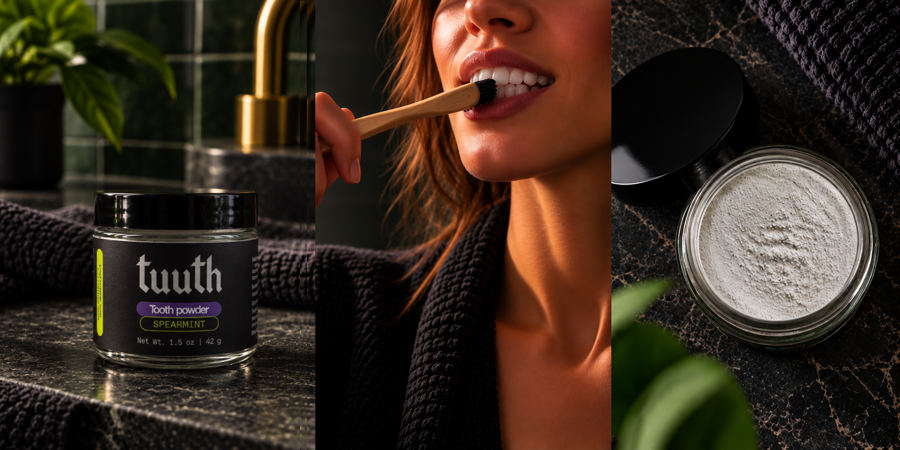
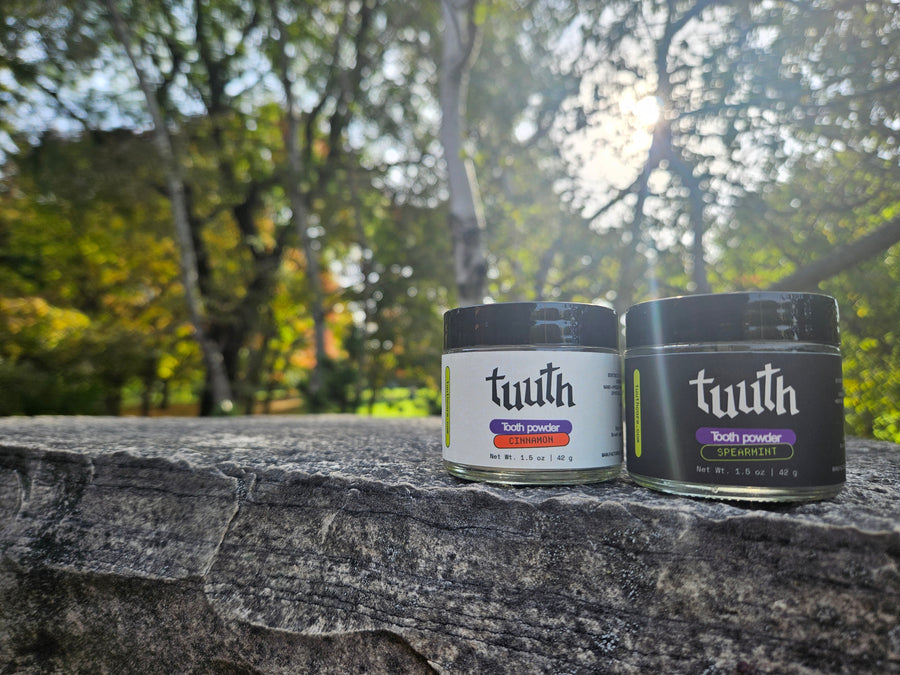
At TUUTH, we chose glass because we wanted everyday oral care to feel more considered—from the product itself to the place it occupies on your bathroom counter.
A jar can also be designed with future refills in mind. But packaging only delivers on that idea when a compatible refill system is actually available.
More broadly, sustainability depends on the full picture: materials, manufacturing, transportation, product use, and what happens to the packaging afterward. A product shouldn't be called zero-waste simply because it comes in a glass jar.
For us, thoughtful design starts with asking better questions about everyday products—and continuing to improve the details.
Who Might Prefer Tooth Powder?
Tooth powder may be worth exploring if you're curious about alternative oral-care formats, interested in ingredient labels, or looking for a different brushing experience.
It may particularly appeal to people who:
-
Prefer a dry formula over a paste or gel.
-
Enjoy exploring different textures and flavor profiles.
-
Pay attention to the design and packaging of everyday products.
-
Want to understand what's in their oral-care products.
-
Are interested in a more intentional daily routine.
That doesn't mean tooth powder is right for everyone. If your priority is a particular oral-health benefit, evaluate the product's evidence and ingredients rather than choosing based on aesthetics or novelty alone.
Your routine should work for you—and support your oral health.
So, Which One Should You Choose?
Tooth powder and toothpaste aren't identical, but the format alone doesn't determine which product is right for you.
Before choosing, ask yourself three questions:
1. What do I need from my oral-care product?
Consider your priorities, whether that's cavity prevention, sensitivity, flavor, packaging, or the overall brushing experience.
2. What does the formula actually contain?
Read the ingredient list and look for evidence supporting the product's claims. Don't assume that a particular ingredient or format guarantees a specific result.
3. Does it fit my oral-health needs?
For most people, fluoride toothpaste remains the ADA-recommended choice for everyday cavity prevention. If you want to explore a fluoride-free alternative, talk with your dentist about what makes sense for you.
The best-informed choice is one that considers both your preferences and your oral health.
Why We Made TUUTH
We started TUUTH with a simple question: why should one of the most consistent routines in our day feel like an afterthought?
Oral care is something we return to every morning and every night. We thought it deserved the same attention we give to the other products we choose to keep around.
So we're rethinking the experience—from the format and ingredients to the packaging and the ritual itself.
TUUTH is our take on modern tooth powder: mineral-based, fluoride-free, and designed with intention. Not because a different format is automatically better, but because everyday products deserve a closer look.
We're here for thoughtful ingredients, considered design, and a brushing routine that feels a little less ordinary.
Ritual, reimagined.
Frequently Asked Questions
Can tooth powder replace toothpaste?
That depends on the product and your oral-health needs. Tooth powder is a format, not a guarantee of cavity protection. For most people, the ADA recommends brushing twice a day with fluoride toothpaste. Ask your dentist before replacing a fluoride toothpaste with a fluoride-free product, especially if you're at higher risk for cavities.
Does tooth powder contain fluoride?
Some products may contain fluoride, while others are formulated without it. Always check the specific product's ingredient list and label rather than assuming all tooth powders are the same.
Does tooth powder whiten teeth?
Don't assume that a tooth powder will whiten teeth simply because it contains mineral or powdered ingredients. Any whitening claim should be supported by evidence for the finished product. If you're looking to address staining or discoloration, a dentist can help you understand the available options.
Is tooth powder abrasive?
Abrasiveness depends on the finished formula and its ingredients, not simply on whether the product is a powder. Look for appropriate evidence and use a soft-bristled toothbrush with gentle technique. Ask your dentist if you have concerns about enamel, sensitivity, or gum recession.
How often should you use tooth powder?
Follow the specific product's directions. Regardless of the format you choose, the ADA recommends brushing twice a day for two minutes with fluoride toothpaste for most people.
Is tooth powder more sustainable than toothpaste?
Not automatically. Packaging materials, manufacturing, transportation, and disposal all matter. Some tooth powders come in reusable glass jars or refill formats, but the environmental impact depends on the entire product system—not just the container.
Is TUUTH tooth powder fluoride-free?
Yes. TUUTH is positioned as a fluoride-free tooth powder. If you're deciding whether a fluoride-free product is right for your routine, consider your personal oral-health needs and consult your dentist.
Ready to Rethink Your Routine?
Your daily brushing ritual might be familiar, but that doesn't mean you can't be more intentional about it.
Meet TUUTH: modern tooth powder for a different kind of brushing routine.
RITUAL, REIMAGINED.
comments